
. . . let me count the ways.
There are at least 10 that I know of and am hoping to find a few more this growing season.
Each type of basil has a uniqueness – a regional adaptation – a particular shade of green or purple – a particular environment to thrive – with tasty turnpenes sure to enhance just about any dish you could wish to make; and has potential nutritional benefits.
Ocimum basilicum (sweet basil) is full of polyphenols, flavonoids and terpenes, making it just as delicious for your body’s parasympathetic nervous system as it is for many a culture’s culinary flavor profiles.
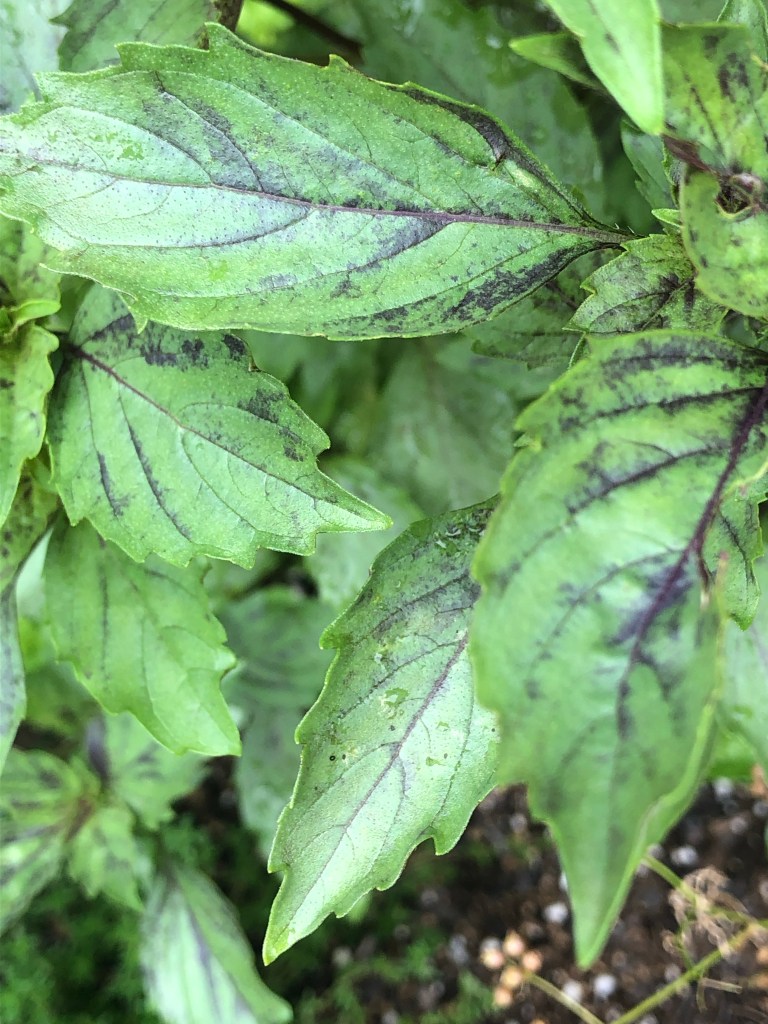
Baker Creek Herilom Seeds
Since I have just finished planting all my baby basil seeds, I thought now would be a good time to publish this post. I waited this year until it warmed up consistently to start the basil this year. It likes the warm, especially the Thai basil varieties, as well as one of my personal favorites, Lettuce Leaf basil. Cinnamon/Thai/Persian like the heat as well, but I think the Lime and Lemon varieties maybe don’t like the humid hot quite as much, from what I’ve seen over the years. Every year is different, what thrives and what seems to last just depending on our humidity here I think. I planted the numerous varieties in succession this year so I could enjoy them and not be overwhelmed but all the varieties at once and stagger the harvest times.
I came to a realization whilst putting this post together, that Basil was really the first herb that I applied in my life medicinally.
After few weeks of study in Florence after graduating college – I had returned and promptly looked up a recipe for basil pesto. And no, not put it in a food processor and press go – I was going to chop it up like an Italian grandma.
While looking for this recipe, I learned a lot about basil. My father had recently passed away summer before, and I had a new found interest for food and it’s ability to heal that I had not had before.
On my research endeavor I discovered that basil is a member of the mint (lamincae) family and has many benefits for digestion as well as mood when used in one’s diet. It is anti-inflammatory (mints usually are) and it’s aromatics are as relaxing as they come. According to a peer reviewed study published in by International Journal of Food Properties, a synopsis of the chemical and pharmacological components of Ocimum basilicum shows high levels of pinenes and eugenol – components of it’s essential oils that have anti-inflammatory effects. Other notable potential uses for basil include anti-microbial, anti-oxidant, radioprotective as well as anti-cancer and immunomodulatory. ª
I believe any and all of these are worth looking into if you’re on the path to natural ways to incorporate herbs into your life for health benefits. I am not a doctor, nor am I qualified to give any medical advice…
I started planting my own basil when I moved back to Tennessee right about 5 years ago. My mom ordered the Emily Basil, Opal and Thai Basil seed packs from Baker Creek Seeds. Since then, it has been an ever expanding menu of basil leaves. Basil loves the weather here, and thrives in the summer.
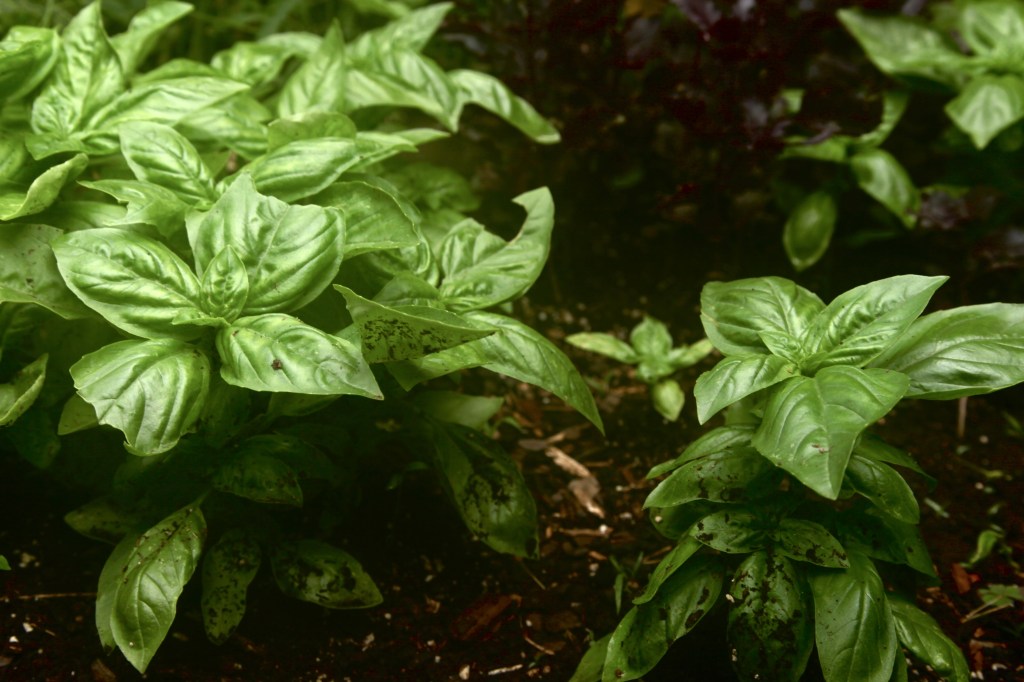
Of all the peculiar variations, I think Lime basil may be my absolute favorite because of it’s sharp, pungent taste.
It’s mouthwatering.
Basils also can be pest resistant. I find almost nothing bothers these plants whether they are in planters or in the ground. Basil is actually an insect and pest deterrent. However, you may find it attracts rabbits 🙂
This year I’m adding Holy Thai “Kaprao”, Cardinal, Siam Queen and African Nunum.
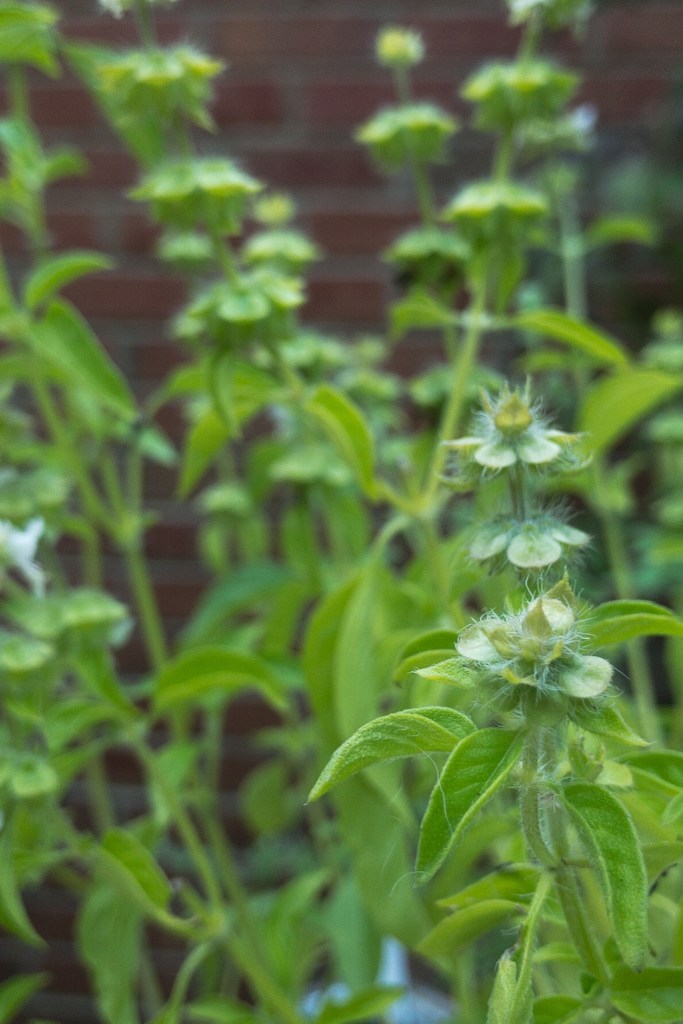

Basil is an annual and self seeds. I find that planting the seeds in place yields a better plant than transplanting seedlings.
I have also found that the Thai, Persian and Cinnamon Varieties love growing in planters, whereas Italian (Genovese), Mammolo and Lettuce Leaf basils tend to prefer the ground. We have rocky red clay here, the Lettuce Leaf especially seems loves it. Seemingly no pests or animal seems to be interested in eating it either 🙂
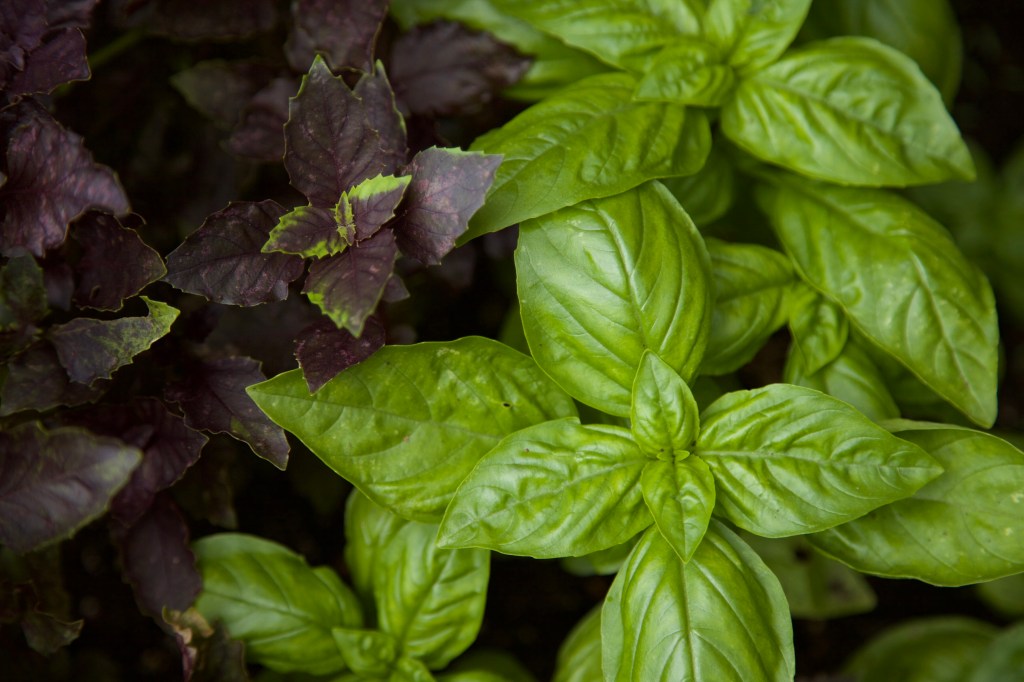
I don’t always use the same recipe every time… now that I’ve been making it for a while – I just use what I like to taste while catering to what I’m preparing it for. However, here is a baseline you can use – but adjust for your liking.
It’s surprisingly simple, but the preparation is where the time comes in. Hand chopping everything into teeny tiny pieces takes some time, patience and a very good, sharp knife.
List of Traditional Ingredients
- Basil, stems and all
- Pine Nuts (walnuts, pecans..)
- Parmesan (the real stuff)
- Garlic
- Olive Oil
- Lemon juice (optional)
- Salt to taste
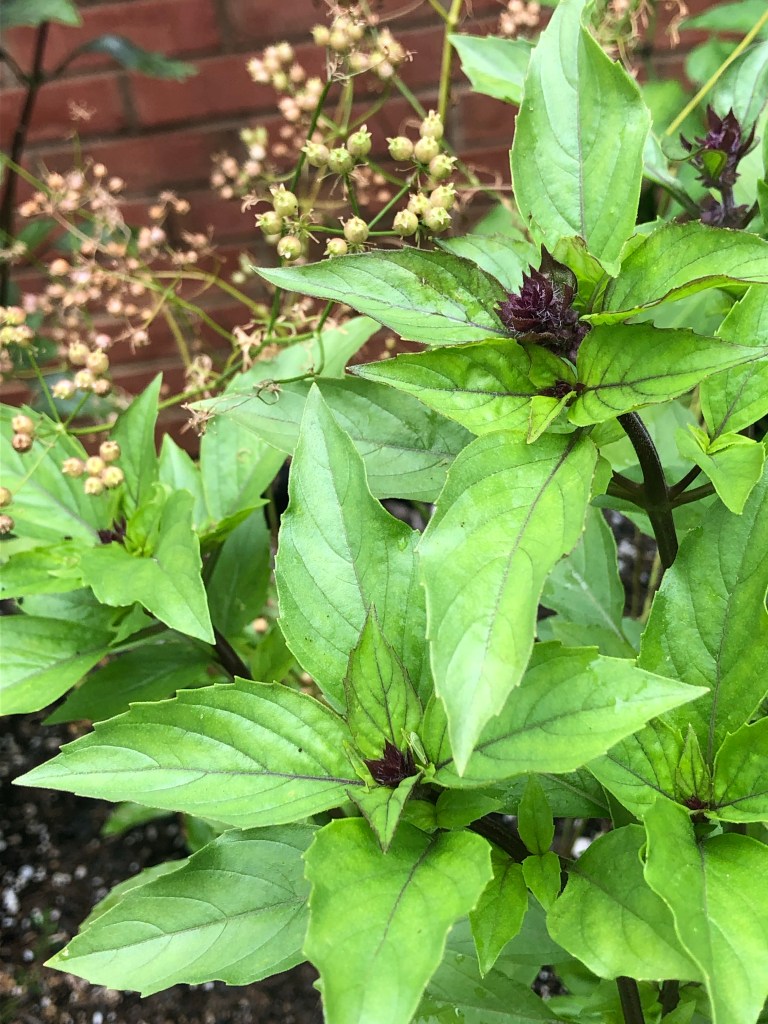
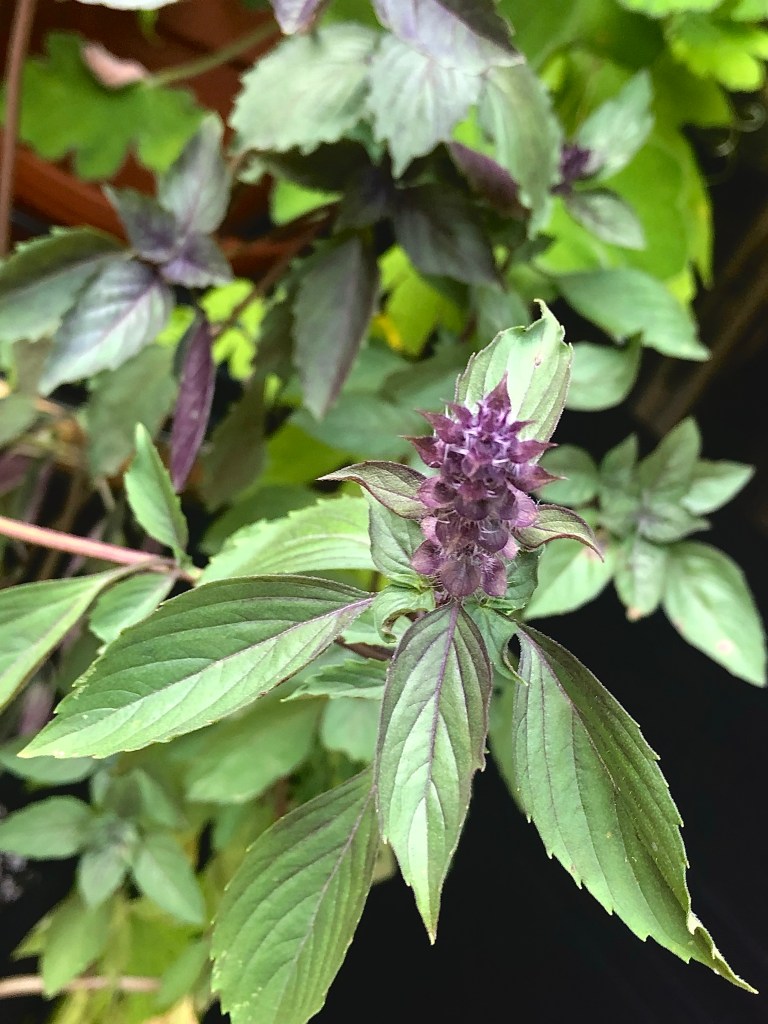
You can of course, swap out ingredients to create different flavor profiles.
Different types of basil might lend to different nuts or maybe even cheeses, depending on what you’re dinner arrangement may consist as well as what cultural influence you’d like in your flavor profiles.
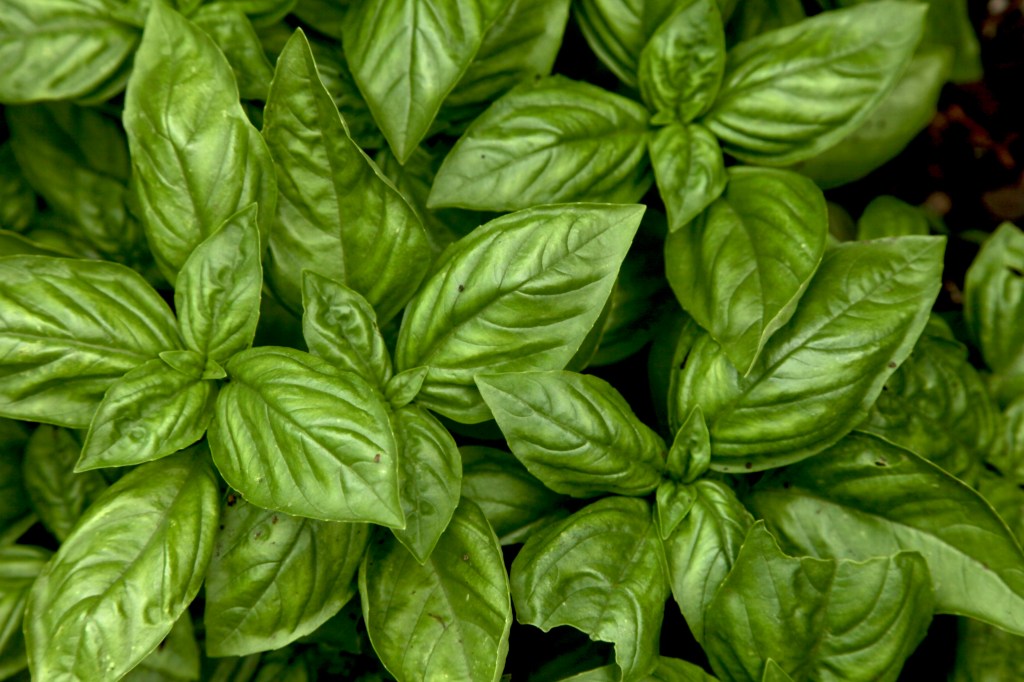
Basil Pesto

4 oz basil

3/4 cup Parmesan

1/2 cup pine nuts

1 tablespoon Olive Oil [adjust for desired consistency]

Pinch of salt

Splash of lemon juice

—————————————————————

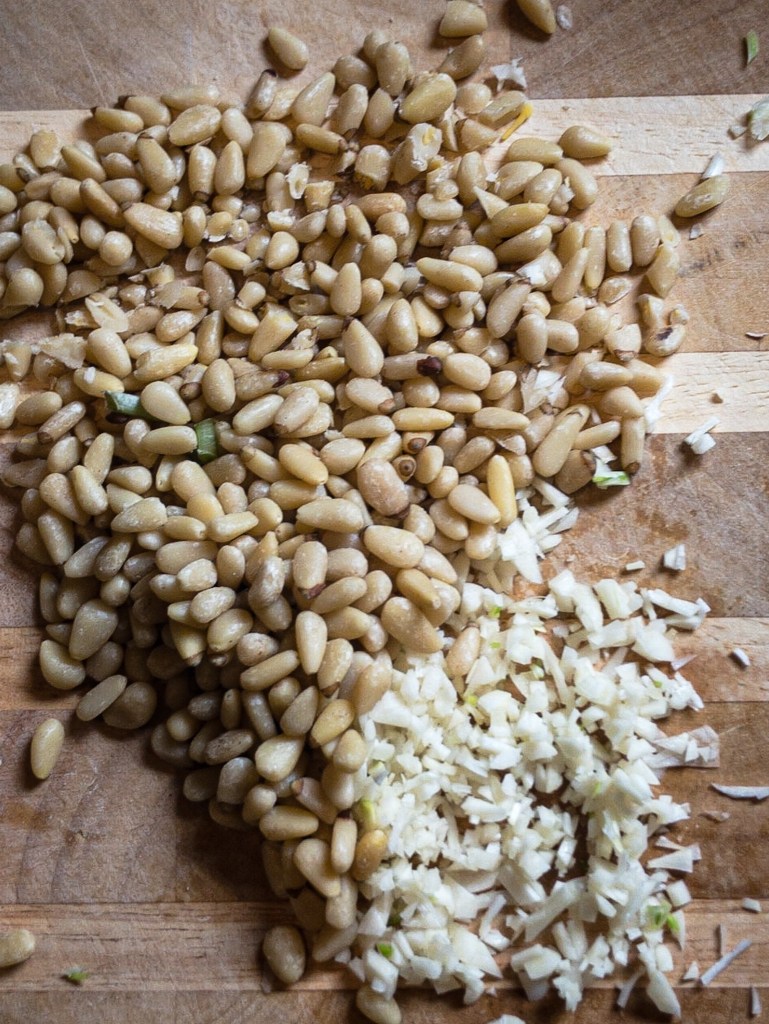
> Start by chopping up garlic cloves, minced.


> Then slowly add in pine nuts; chop small and set aside.


> Bunch the basil leaves together tightly, and slice through the leaves with a smooth motion, i like to do it on a diagonal: i find it feels more natural for my hand.


> This should resemble a bunch of tiny strips, like skinny grass blades. Proceed to cut the basil down, with a follow through motion.


> You can use a pizza cutter, mezzaluna; I like to use small Japanese knife because it glides through the basil nicely.

   * Some people use a chef’s knife 🙂


> Now, you can start adding the garlic & pine nut mix in.
Add, chop, Add, chop. Add, chop….


> Once you get down to a pretty fine texture, add the grated or shredded parmasean in.  Chop till blended.

> Add spash of lemon and pinch of salt, then toss.

* If you are going to freeze to save for later, now is the time! I like to use an ice cube tray.

* If you are ready to serve or cook with the pesto, you can now add olive until you reach the desired consistency for your needs!

And you’re done! Enjoy 🙂

p.s. you can adjust the ratio of ingredients to suit your liking 🙂
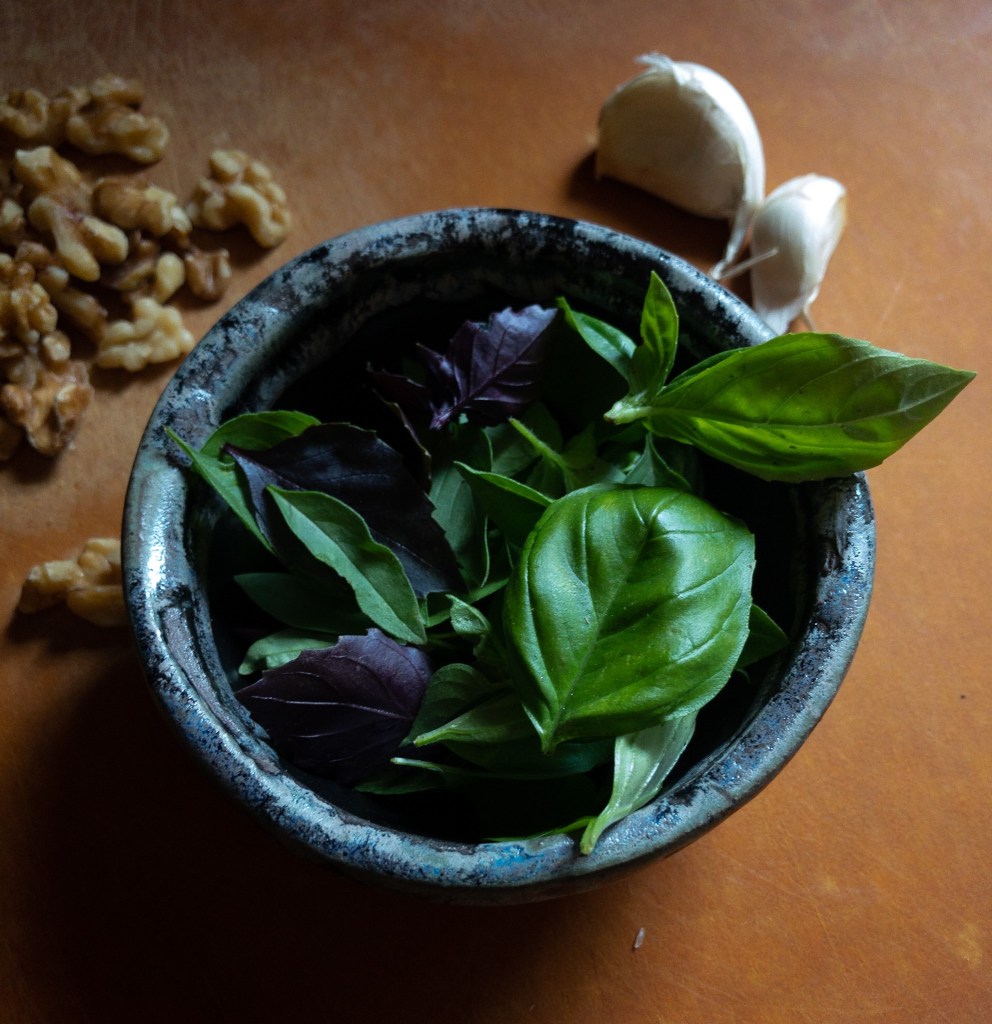

If you use lime or lemon basil, you can change it up and add some black pepper to spice it up with cotija cheese and cayenne. All the variations of basil make for endless possibility of combinations!
You can also use a 2:1 ratio of basil and spinach if you’re looking to get a brighter green

color and maybe extend the shelf life of the pesto just a bit. It would also have a slightly more mild flavor.
This is especially helpful if you’re preparing a large catering size portion!


Perhaps swap the pine nuts for pecans with the cinnamon basil and a soft goat cheese instead of Parmesan for a creamy sauce on chicken…maybe with some roasted pears on the side….
I sometimes just like to swap the pine nuts for walnuts.

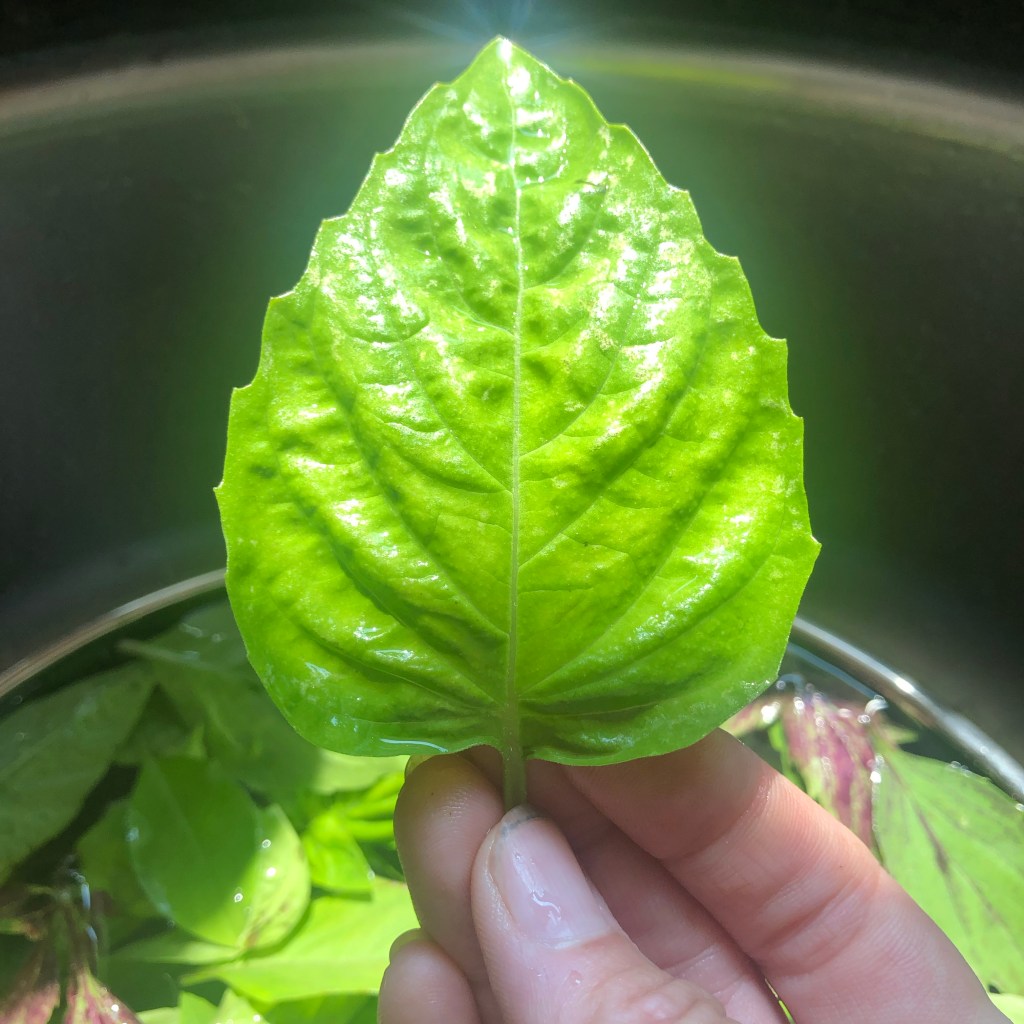
All of the varieties shown here are seeds from Baker Creek Seeds. They are located in Missouri and I highly recommend their catalog!
ª Mohamad Hesam Shahrajabian, Wenli Sun & Qi Cheng (2020) Chemical components and pharmacological benefits of Basil (Ocimum basilicum): a review, International Journal of Food Properties, 23:1, 1961-1970, DOI: 10.1080/10942912.2020.1828456
 j m
j m 